
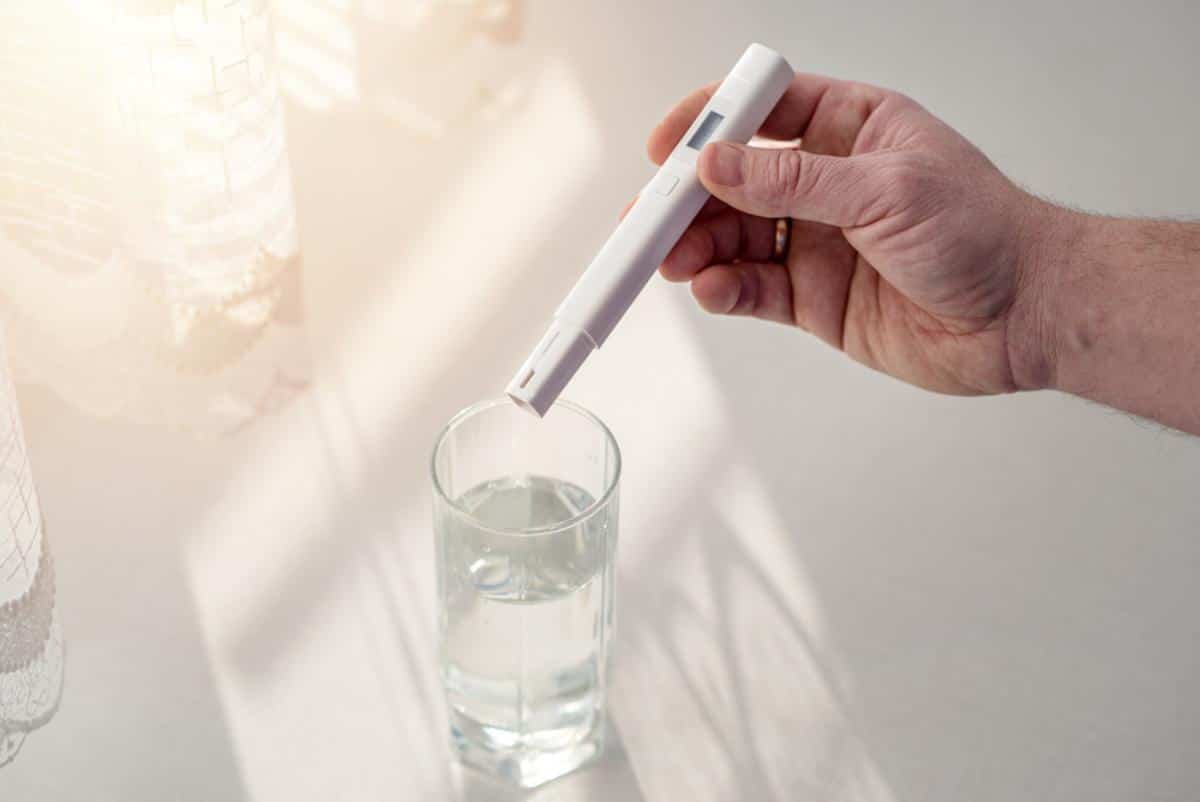
Key Takeaways
TDS (Total Dissolved Solids) measures the concentration of dissolved minerals and matter in water, but it doesn’t tell you whether that water is safe, since it can’t detect bacteria or chemical contaminants on its own. Most guidelines treat TDS under 500 mg/L as acceptable for taste, and TDS varies by source, season, and location across Thailand. If you’re comparing options, a drinking water purifier handles far more than just TDS, and Wells can help you choose one suited to your household’s actual water quality.
If you’ve ever used a water quality meter, you’ve probably seen a reading labeled TDS. But what does that number actually mean, and does a higher or lower reading indicate better drinking water?
Total Dissolved Solids (TDS) is a useful indicator of water quality, but on its own, it isn’t enough to judge whether water is safe to drink.
Here’s a guide to help you understand what it actually measures and whether a purifier is worth adding to the picture.
What Is TDS in Water?
TDS stands for Total Dissolved Solids: the combined concentration of dissolved minerals, salts, and trace amounts of organic and inorganic matter in a water sample. It’s measured in parts per million (ppm) or milligrams per liter (mg/L), and the two units are functionally interchangeable.
TDS tells you how much is dissolved in the water. It doesn’t tell you what the water actually contains. A TDS meter can’t detect bacteria, viruses, or specific chemical contaminants, and it can’t distinguish beneficial minerals like calcium and magnesium from less desirable dissolved matter.
That’s why TDS should always be read alongside other water quality indicators, not treated as a stand-alone verdict.
What Is the Safe TDS Level for Drinking Water?
TDS standards for drinking water based on guidance referenced by the World Health Organization consider TDS below 500 mg/L acceptable for palatability, though the exact threshold varies slightly by country and water source:
- Excellent: under 300 mg/L
- Good: 300-600 mg/L
- Low/flat threshold: roughly under 50 mg/L
- High/metallic threshold: roughly above 900-1,200 mg/L
Lower TDS doesn’t automatically mean safer water. It’s a taste indicator more than a safety one.
Does Higher TDS Mean Unhealthy Water?
Not necessarily. A higher reading on its own doesn’t mean the water is unsafe. Some dissolved minerals, like calcium and magnesium, occur naturally and simply contribute to water hardness.
How Tap Water TDS Standards Vary: Bangkok vs. Provincial Tap Water
TDS levels depend on the local water source, the treatment process, and the distribution system water travels through before it reaches a tap.
Bangkok’s municipal supply, treated by the Metropolitan Waterworks Authority from the Chao Phraya and Mae Klong rivers, typically tests in a moderate range, though pipe age and building storage tanks can shift readings by the time water reaches an individual unit.
Water from different provinces comes from various sources like rivers, groundwater, or wells, resulting in distinct natural mineral compositions. A well in a certain province could naturally contain higher levels of dissolved calcium compared to a river-fed system.
The values, in isolation, provide no information regarding safety. Local water testing is necessary to confirm the actual TDS values.
Why TDS Changes
- Source water: Rivers, groundwater, and wells all carry different natural mineral loads.
- Seasonal conditions: Rainfall and dry-season shifts can change a source’s mineral concentration.
- Pipe infrastructure: Older pipework and building storage tanks can shift readings between the treatment plant and the tap.
- Natural mineral content: Some areas simply sit on water with more dissolved calcium or magnesium than others, regardless of treatment.
Can a Water Purifier Reduce TDS?
Not all drinking water purifiers reduce TDS. Reverse osmosis (RO) systems are specifically designed to strip out dissolved solids through a fine membrane, which is why RO output often reads close to zero on a TDS meter. Other filtration methods work differently. They primarily target chlorine, sediment, and odors while leaving more of the water’s natural mineral content in place.
Choosing the right purifier starts with understanding your home’s specific water quality. Look for a system with effective, verified filtration, reliable day-to-day performance, and convenient everyday use, rather than picking a technology because it promises the lowest possible TDS reading.
Should You Test Your Home’s Water?
Testing is useful in a few specific situations: moving into a new home, relying on private well water, noticing an odd taste or smell, or after renovations that touch your plumbing. A simple TDS meter gives a quick read, but it’s only a starting point.
Comprehensive water testing beyond TDS assesses pH, hardness, and microbial contamination.
Why Choose Wells for Your Drinking Water
Wells water purifiers are built around verified, multi-stage filtration rather than a single number on a meter. The 9-filter system is designed to reduce contaminants while preserving essential minerals, backed by Korean engineering and local after-sales service across Thailand. Whatever your household’s water source looks like on a TDS test, the goal is the same: water that’s genuinely clean and still tastes like water.
Looking for cleaner, better-tasting drinking water at home? Explore Wells’ range of water purifiers, designed to deliver reliable filtration and convenient hydration for modern Thai households.
Contact Wells Thailand:
- LINE OA: @wellsthailand or https://bit.ly/36pYHXp
- Phone: 082-826-4999
- Email: info@wellsthailand.com
References
- Total Dissolved Solids in Drinking-water: Background Document for Development of WHO Guidelines for Drinking-water Quality. Retrieved July 10, 2026, from https://www.who.int/docs/default-source/wash-documents/wash-chemicals/total-dissolved-solids-background-document.pdf
- Consumption of Low TDS Water. Water Quality Association. Retrieved July 10, 2026, from https://wqa.org/wp-content/uploads/2022/09/2015_TDS.pdf
Frequently Asked Questions About TDS in Water (FAQs)
- Q: What is TDS in water?A: TDS, or Total Dissolved Solids, measures the combined concentration of dissolved minerals, salts, and organic and inorganic matter in water, expressed in ppm or mg/L.
- Q: What is the safe TDS level for drinking water?A: Most guidelines consider TDS below 500 mg/L acceptable for taste, with under 300 mg/L generally rated excellent. Standards vary slightly by country and water source.
- Q: How different is TDS between Bangkok tap water vs. provincial tap water?A: TDS depends on the local water source, treatment process, and distribution system, so Bangkok and provincial tap water can read quite differently, sometimes even street by street.
- Q: Does a water purifier reduce TDS?A: It depends on the technology. Reverse osmosis systems are designed to strip out roughly 90 to 99 percent of dissolved solids, while other filtration methods mainly target chlorine, sediment, and odors while retaining more natural minerals.
- Q: Is lower TDS always better?A: Not necessarily. Very low TDS can taste flat and strip out beneficial minerals, while very high TDS can affect taste and indicate scaling issues.
- Q: What is the tap water TDS standard used in Thailand?A: Thailand’s water authorities generally follow WHO-referenced guidelines, but actual household TDS varies by location, pipe condition, and building storage, so local testing is more reliable than a single national figure.