
Key Takeaways
- Direct piping dispensers connect to the building’s water line and purify water at the point of use, removing the need for refill bottles entirely.
- Tankless purifiers filter water on demand through multiple stages, dispensing it fresh every time with no stored water sitting inside a tank.
- Common filtration stages include sediment, carbon, nano or membrane, UV sterilization, and mineral-support filters.
- Direct piping systems offer better hygiene, less maintenance, and a more compact footprint compared to traditional bottle dispensers.
- The right system depends on filtration quality, sterilization features, temperature options, unit size, and after-sales service.
What Is a Direct-Piping Water Dispenser?
A direct-piping water dispenser connects to the building’s water supply line, filters water internally, and dispenses purified water on demand. A direct-piping system provides a continuous water supply from the main line, unlike bottle-refill dispensers that need frequent deliveries of pre-filled containers, which also take up storage space and require manual lifting. Scheduled filter replacement is the sole recurring task, offering a less demanding option for homes and businesses. This setup also means the water is filtered fresh at the point of use rather than stored in a container for an extended period.
How Tankless Water Purifiers Work
Once connected to the water line, a tankless purifier processes water through three core stages:
- Water inlet and filtration: Water enters the unit through the connected pipe and passes through multiple filtration stages designed to reduce impurities, odor, and fine particles. Depending on the model, systems may include up to nine individual filters.
- Direct dispensing: Purified water is dispensed the moment a user activates the unit. Many models offer hot, cold, and ambient water from a single spout, accommodating a range of daily needs.
- Hygiene functions: To maintain internal cleanliness, many tankless models feature automatic sterilization, manual sterilization, and auto water drainage. These functions help reduce stagnant water and support cleaner internal piping over time.
The absence of an internal storage tank means the system delivers freshly filtered water with every use, while also maintaining a more compact unit size. This is the central distinction between tankless and tank-based purifiers.
The Differences Between Tankless and Tank Water Purifiers
Tank-based water purifiers store filtered water in an internal reservoir. While this supports fast dispensing, purified water remains sitting inside the unit between uses. In Thailand’s warm and humid climate, standing water in a tank may require more frequent cleaning to maintain acceptable hygiene levels.
Water is filtered by tankless purifiers instantly as needed, with each serving purified as it’s dispensed, eliminating the need for a storage tank. This design addresses water stagnation issues and takes up less space, making tankless systems ideal for small condo kitchens, office pantries, and reception areas.
The quality of the filtered output, however, depends on the type and number of filtration stages within the unit.
Types of Water Purification Filters Used in Tankless Purifiers
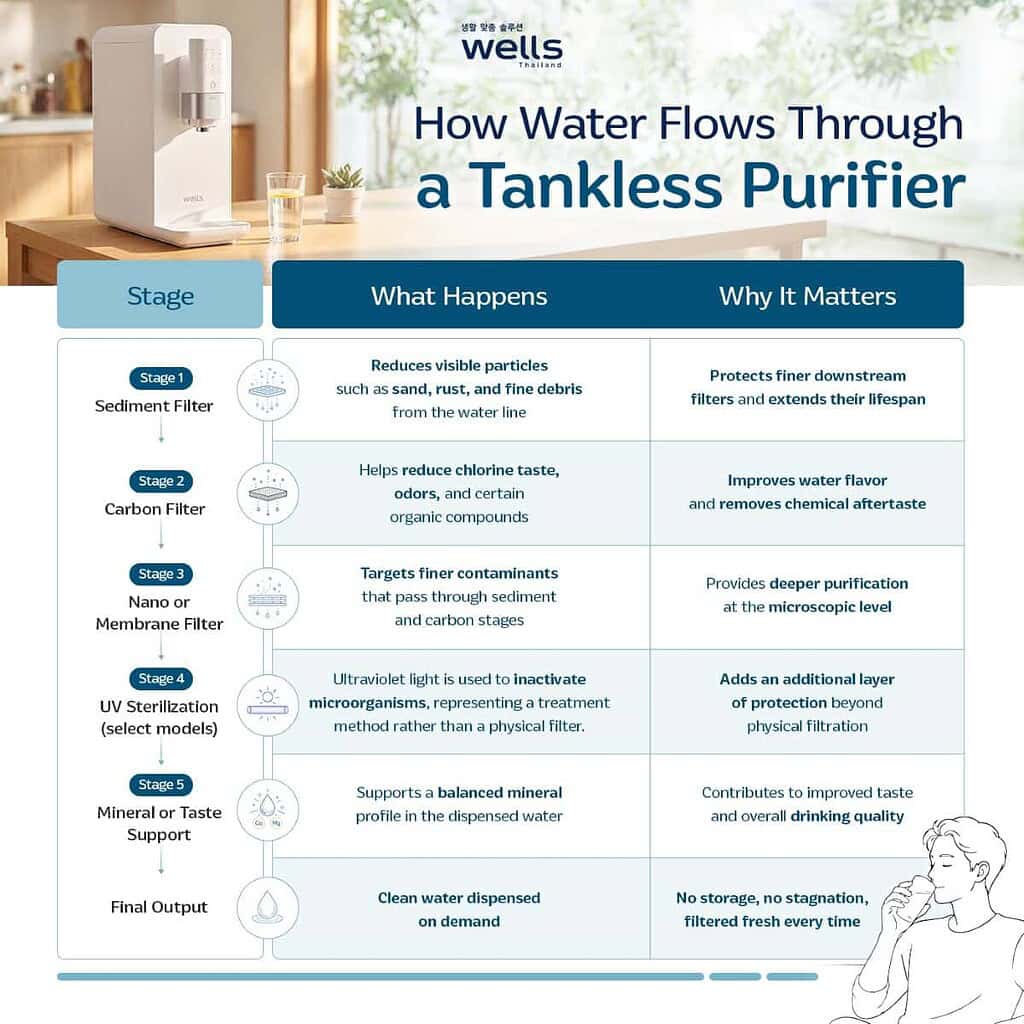
Most tankless purifiers rely on multi-stage filtration, with each stage addressing a specific category of impurity. Common stages include sediment filtration for visible particles such as sand and rust, carbon filtration for chlorine taste and odor, nano or membrane filtration for finer contaminants, UV sterilization for inactivating microorganisms, and mineral-supporting stages for balanced taste. The number and type of stages vary by model, so it’s important to understand what each one contributes. The infographic below illustrates how these stages work in sequence within a tankless system.
An infographic about how water flows through a tankless purifier, from sediment to mineral stages
When evaluating models, prioritize those that detail each filter stage’s purpose (e.g., sediment, chlorine, fine particles, microorganisms) over systems that only provide a total filter number without functional descriptions.
Why Choose Direct-Piping?
Compared to conventional bottle dispensers, direct-piping systems offer measurable advantages across four areas:
- No bottles to replace: Direct piping removes the need to order, lift, store, and replace water bottles. For condo residents in Bangkok or offices without dedicated storage, this reduces both physical effort and logistical overhead.
- More hygienic daily use: Eliminating bottle handling reduces contamination touchpoints. Sterilization and auto-drainage features further support cleaner operation.
- Space-saving design: Direct-piping dispensers are more compact than bottle systems and do not require storage for spare containers, making them suitable for kitchens, office pantries, and reception areas.
- Better daily convenience: Hot, cold, and ambient water from a single unit covers tea, coffee, cooking, and everyday drinking needs.
Over time, the recurring cost of bottled water delivery can exceed the investment in a direct-piping system, making it a more cost-efficient option for high-usage households and workplaces.
Key Features to Look For
When planning to buy a water purifier in Thailand, the following features are worth evaluating carefully:
- Filtration quality: Review the number of filtration stages and confirm that each stage serves a clearly defined purpose.
- Sterilization and drainage: Auto sterilization and auto drainage help maintain internal cleanliness between scheduled service visits.
- Temperature settings: Systems with hot, cold, and ambient options accommodate a wider range of daily requirements than ambient-only models.
- Design and dimensions: Verify the unit’s physical size before purchasing. Slim, direct-dispensing models are designed specifically for modern kitchens, condos, and offices.
- After-sales service: Professional installation, scheduled filter replacement, and accessible technician support are essential for long-term reliability.
Why Choose Wells for a Direct-Piping Purifier?
Multi-stage filtration, tankless dispensing, and built-in hygiene functions are the features that matter most in a direct-piping purifier, and Wells has engineered its product line around all three. Wells The One, in particular, fits a 9-filter system, automatic sterilization, auto drainage, and hot, cold, and ambient water into one of the smallest form factors on the market, making it a practical choice for compact condo kitchens and busy office pantries across Thailand, though other models in the range are also available for different space requirements and filtration preferences.
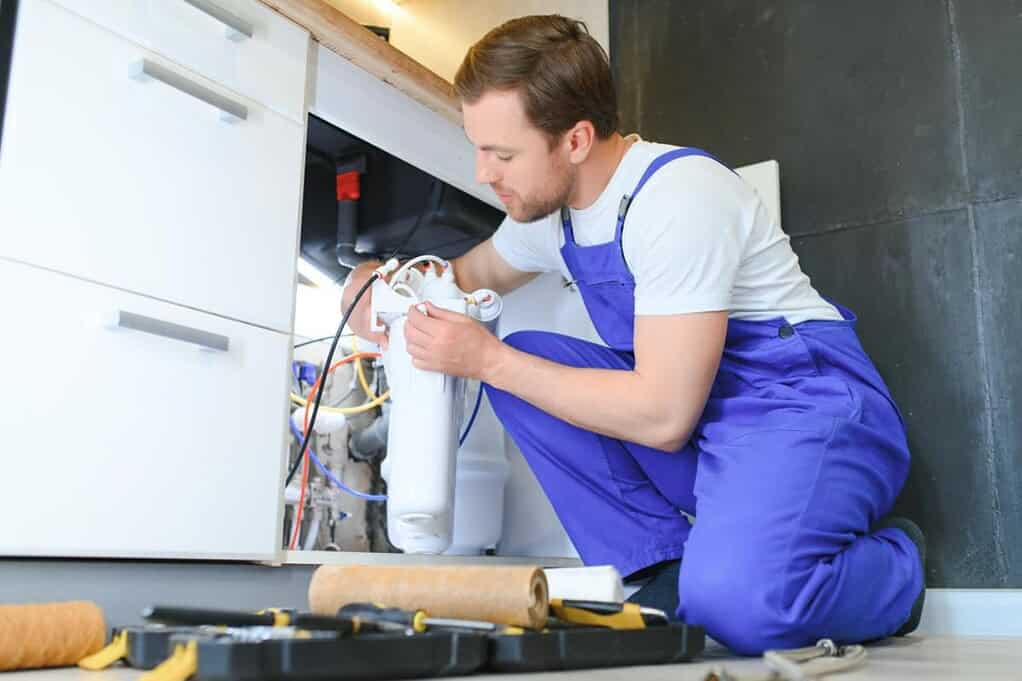
Professional installation and after-sales support come standard with every unit, covering setup, scheduled filter replacement, and local technician visits so that ongoing maintenance stays with the service team rather than the owner. Contact Wells Thailand to find the right model for your home, condo, or office.
Contact Wells Thailand:
- LINE OA: @wellsthailand or https://bit.ly/36pYHXp
- Phone: 082-826-4999
- Email: info@wellsthailand.com
References:
- About Home Water Treatment Systems. Retrieved 16 July 2026, from https://www.cdc.gov/drinking-water/about/about-home-water-treatment-systems.html
Frequently Asked Questions About Direct-Piping Water Dispensers
Q: Do tankless water purifiers need professional installation?
A: Yes. Tankless purifiers that use direct piping require a connection to the building’s water supply line, which should be handled by a qualified technician. Professional installation helps confirm that water pressure, pipe compatibility, and electrical requirements are properly addressed before the unit is used.
Q: How often should filters be replaced in a tankless water purifier?
A: Filter replacement schedules vary by model and daily usage. Most systems require filter changes every 6 to 12 months, though some individual stages may have longer intervals. Following the manufacturer’s recommended schedule is important for maintaining filtration performance.
Q: Are direct-piping water dispensers suitable for offices in Thailand?
A: Yes. Direct-piping dispensers are well suited for office environments, particularly pantries serving multiple staff throughout the day. They provide continuous access to purified water without the need for bottle deliveries or storage, and models with hot, cold, and ambient settings cover a range of daily beverage needs.
Q: Can a tankless purifier work with Thai household water lines?
A: Most tankless purifiers are compatible with standard Thai water lines, though installation may depend on factors such as water pressure, inlet conditions, and pipe configuration. A professional assessment before installation helps confirm suitability for the specific building or unit.